
Reliable wireless connectivity has become essential for modern business operations. From cloud applications and mobile devices to security systems and customer-facing technologies, businesses depend on strong Wi-Fi performance to support productivity, communication, and operational continuity.
However, many wireless performance issues are caused by inadequate planning rather than equipment failures. Dead zones, weak signal coverage, interference, and capacity limitations often result from networks that were deployed without a comprehensive understanding of the physical environment.
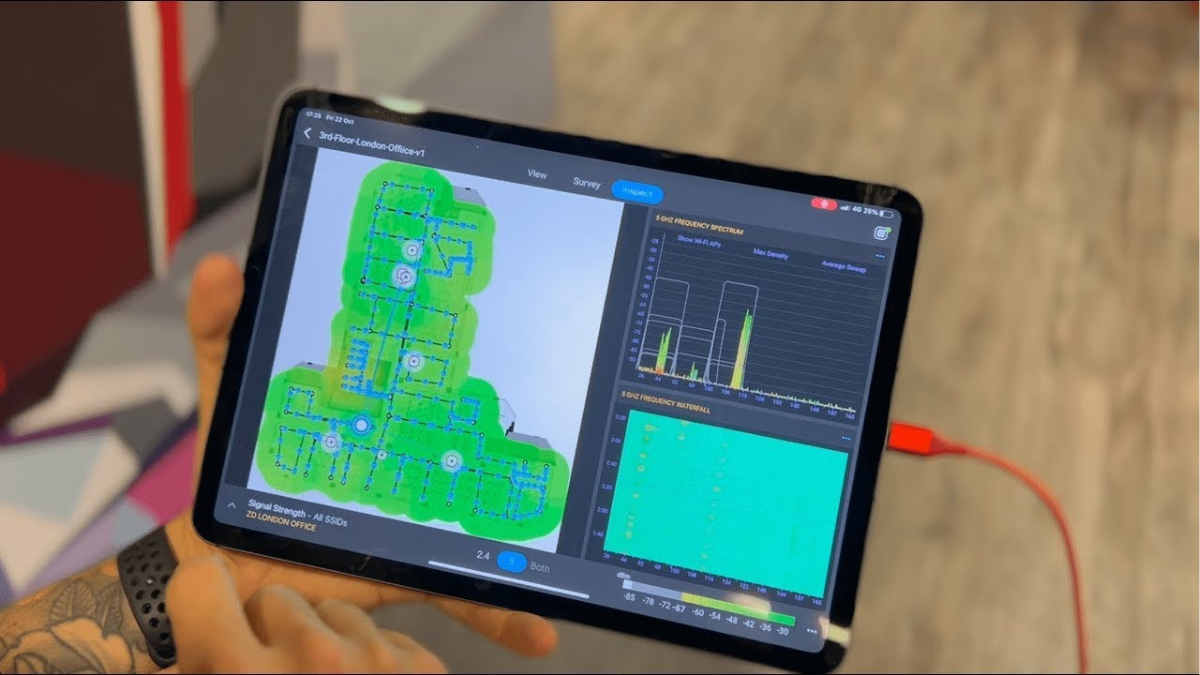
A Wi-Fi site survey helps businesses evaluate wireless coverage requirements, identify potential obstacles, and design networks that deliver reliable performance. Using professional wireless design and survey tools such as Ekahau, organizations can make data-driven decisions that improve network reliability and user experience.
This article explains when businesses should conduct a Wi-Fi site survey, why surveys are important, and how they help support successful wireless network deployments.
Key Takeaways
• Wi-Fi site surveys help businesses design reliable wireless networks based on real-world conditions
• Surveys identify coverage gaps, interference sources, and capacity challenges before deployment
• New construction, renovations, and network upgrades are common triggers for site surveys
• Wireless surveys help improve performance for users, devices, and connected technologies
• Site surveys support better access point placement and infrastructure planning
• Post-installation surveys help validate network performance and coverage goals
• Professional survey tools such as Ekahau provide detailed wireless analysis and design insights
What Is a Wi-Fi Site Survey?
A Wi-Fi site survey is a structured evaluation of a physical environment to determine how wireless signals will perform within a facility.
The goal is to design and optimize wireless infrastructure based on:
• Building layout
• Construction materials
• Device density
• Coverage requirements
• Capacity needs
• Potential interference sources
• Operational workflows
Site surveys help businesses avoid common wireless issues that can negatively affect performance after installation.
Organizations seeking reliable wireless infrastructure may also benefit from understanding what makes a commercial wireless network reliable.
Why Wi-Fi Site Surveys Matter
Wireless networks are affected by far more than access point specifications.
Factors that impact wireless performance include:
| Wireless Factor | Potential Impact |
| Building materials | Signal attenuation |
| Equipment placement | Coverage consistency |
| Device density | Network congestion |
| RF interference | Performance degradation |
| Facility layout | Coverage gaps |
| Environmental changes | Signal fluctuations |
Without a site survey, businesses often rely on assumptions rather than measurable wireless data.
A professional survey provides insight into how the wireless network will perform in actual operating conditions.
1. Before Deploying a New Wireless Network
One of the most important times to conduct a Wi-Fi site survey is before installing a new wireless network.
A pre-deployment survey helps determine:
• Access point quantity requirements
• Access point placement locations
• Coverage objectives
• Capacity planning needs
• Cabling requirements
• Infrastructure considerations
This process reduces the likelihood of costly adjustments after installation.
Benefits of Pre-Deployment Surveys
| Benefit | Operational Impact |
| Better coverage planning | Fewer dead zones |
| Improved capacity design | Better user experience |
| Optimized hardware placement | Reduced installation costs |
| Greater deployment accuracy | Faster project completion |
Businesses planning new wireless environments should perform surveys before infrastructure deployment begins.
2. During New Construction Projects
New construction projects provide an ideal opportunity to conduct wireless planning before walls, ceilings, and infrastructure systems are completed.
Early-stage Wi-Fi surveys help project teams coordinate:
• Wireless design requirements
• Cabling pathways
• Equipment room planning
• Network infrastructure needs
• Future scalability requirements
Integrating wireless planning early often reduces project costs and avoids infrastructure modifications later.
Organizations involved in new facility deployments may also benefit from understanding the commercial network installation process.
3. Before Office Renovations or Facility Changes
Building modifications can significantly affect wireless performance.
Examples include:
• New walls or partitions
• Warehouse racking installations
• Store layout changes
• Expanded office spaces
• Equipment relocations
• Facility additions
These changes can alter signal propagation patterns and create new coverage challenges.
Conducting a site survey before renovations helps ensure the wireless network continues to support operational requirements after construction is complete.
4. When Experiencing Coverage Problems
Persistent wireless performance issues often indicate the need for a site survey.
Common symptoms include:
• Dead zones
• Weak signal areas
• Frequent disconnects
• Slow wireless performance
• Inconsistent connectivity
• Device roaming issues
A survey can help identify whether the issue is caused by:
• Poor access point placement
• Interference sources
• Insufficient coverage
• Capacity limitations
• Physical obstructions
Rather than simply adding more access points, businesses should first understand the root cause of performance issues.
5. Before Deploying High-Density Wireless Environments
Some facilities require significantly greater wireless capacity than traditional office environments.
Examples include:
| High-Density Environment | Wireless Demand |
| Retail stores | High |
| Restaurants | Moderate to High |
| Warehouses | High |
| Healthcare facilities | High |
| Event spaces | Very High |
| Distribution centers | High |
In these environments, capacity planning becomes just as important as coverage planning.
A site survey helps determine how many devices the network must support and how wireless resources should be allocated.
6. When Deploying Connected Security Systems
Many modern security technologies rely heavily on wireless connectivity.
Examples include:
• Mobile security systems
• Wireless surveillance cameras
• Access control systems
• IoT security sensors
• Asset tracking platforms
Poor wireless performance can negatively affect security visibility and system responsiveness.
Businesses deploying connected security technologies may also benefit from reading how network infrastructure supports mobile security systems.
7. Before Expanding to Additional Locations
Organizations with multiple locations often benefit from standardized wireless deployment practices.
A site survey helps ensure each location receives:
• Consistent coverage standards
• Reliable performance expectations
• Proper equipment sizing
• Scalable infrastructure design
This becomes especially important for businesses managing large-scale rollouts across multiple facilities.
Companies planning expansion initiatives may also benefit from understanding managing multi-site network installations successfully.
8. After Network Installation
Site surveys are not only valuable before deployment.
Post-installation validation surveys help confirm that:
• Coverage objectives were achieved
• Capacity requirements are being met
• Roaming performance is acceptable
• Wireless interference is controlled
• Network design goals were accomplished
Validation surveys provide measurable data that verifies network performance under real operating conditions.
How Ekahau Supports Professional Wi-Fi Site Surveys
Professional wireless surveys require specialized tools capable of measuring, analyzing, and visualizing wireless performance.
Ekahau is one of the industry’s leading wireless design and site survey platforms.
Ekahau helps network professionals:
• Design wireless networks before deployment
• Model coverage requirements
• Identify interference sources
• Validate wireless performance
• Optimize access point placement
• Analyze roaming behavior
• Generate detailed survey reports
By using professional survey tools, businesses can make informed infrastructure decisions based on measurable wireless data rather than assumptions.
Common Signs Your Business Needs a Wi-Fi Site Survey
Consider a Site Survey If You Experience:
• Frequent wireless complaints from users
• Areas with poor signal strength
• Network slowdowns during peak usage
• Expansion into new facilities
• Planned renovations or layout changes
• Security system connectivity issues
• Wireless device growth
• Upcoming network upgrades
Identifying these issues early can help prevent larger operational disruptions.
Frequently Asked Questions
What is a Wi-Fi site survey?
A Wi-Fi site survey is an evaluation of a facility’s wireless environment used to design, optimize, or validate network performance.
When should a business conduct a Wi-Fi site survey?
Businesses should conduct surveys before new installations, during renovations, when experiencing wireless issues, before expansions, and after deployments to validate performance.
Why are Wi-Fi site surveys important?
Site surveys help identify coverage gaps, interference sources, capacity requirements, and optimal access point placement.
Can building changes affect Wi-Fi performance?
Yes. Walls, shelving, equipment, and layout modifications can significantly affect wireless signal propagation and coverage.
What is Ekahau used for?
Ekahau is a professional wireless design and site survey platform used to analyze, plan, optimize, and validate Wi-Fi network performance.
Should businesses perform post-installation surveys?
Yes. Validation surveys help confirm that wireless networks meet design goals and perform as expected.
Final Thoughts
A Wi-Fi site survey is one of the most valuable steps businesses can take to ensure reliable wireless performance. Whether planning a new network, expanding to additional locations, deploying connected technologies, or troubleshooting existing issues, a professional survey provides the data necessary to make informed infrastructure decisions.
By identifying coverage requirements, interference risks, capacity challenges, and optimal equipment placement, businesses can improve wireless reliability, support operational growth, and reduce costly performance issues.
Prime-Net utilizes Ekahau to conduct professional Wi-Fi site surveys that help organizations design, validate, and optimize wireless networks for commercial environments. Our team supports businesses with wireless planning, network infrastructure deployment, and connectivity solutions designed to deliver reliable performance across single-site and multi-site operations.
If your organization is planning a wireless network deployment or experiencing connectivity challenges, contact Prime-Net at info@prime-net.net to learn more about our Wi-Fi site survey and network infrastructure services.