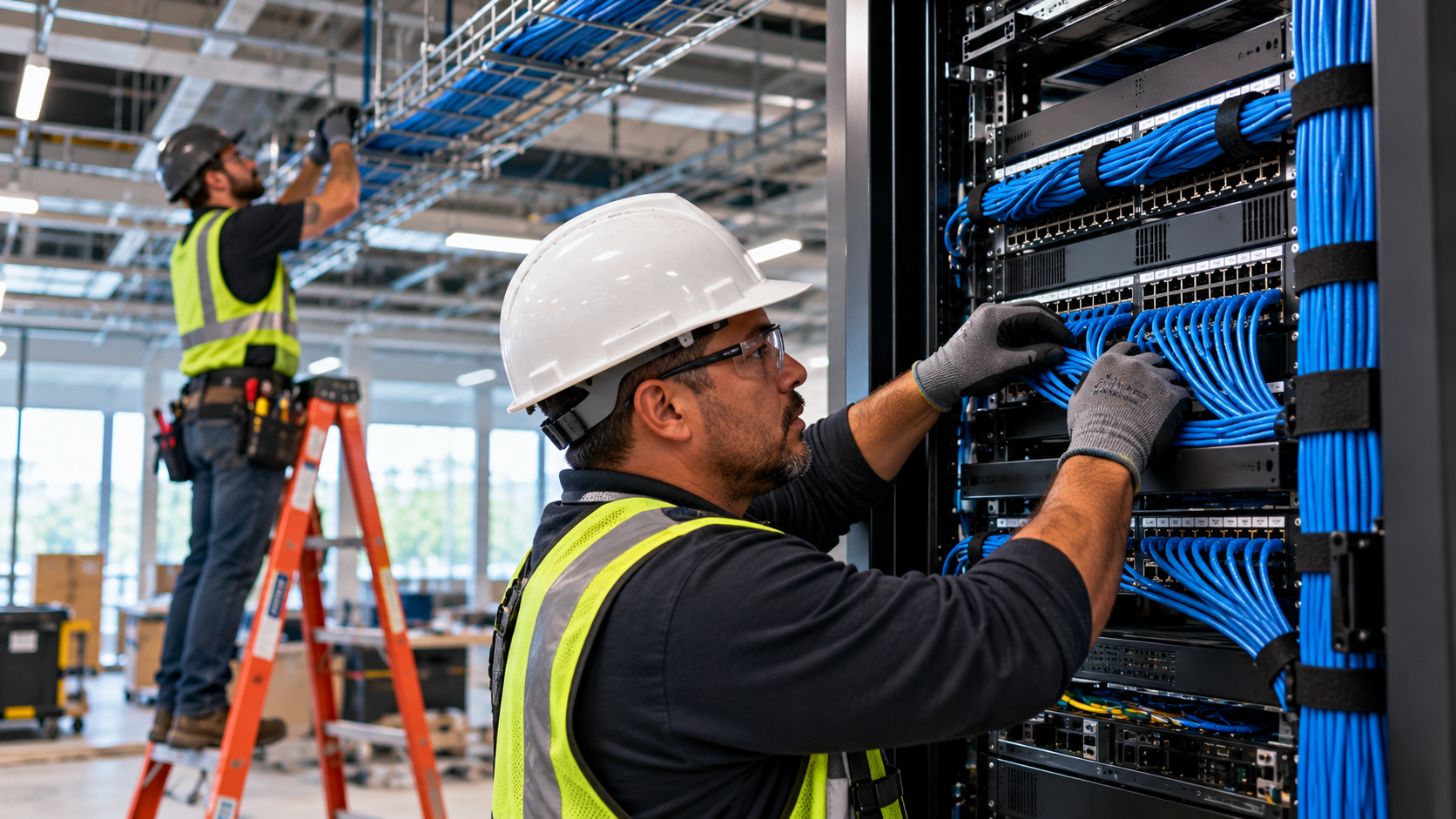
Low-voltage systems play an essential role in modern commercial environments. From point-of-sale (POS) systems and wireless networks to CCTV cameras and structured cabling, these technologies depend on properly installed infrastructure to operate reliably.
For retailers and organizations managing multiple facilities, low-voltage installation projects require careful planning, technical coordination, and consistent execution. Poorly planned installations can result in connectivity issues, equipment downtime, difficult maintenance, and costly rework.
Successful installations involve more than running cables and connecting devices. They require a coordinated approach that accounts for building conditions, equipment requirements, cable pathways, network infrastructure, testing, and documentation.
Following established low-voltage installation best practices helps organizations build reliable technology infrastructure, reduce installation errors, and support long-term system performance.
What Is a Low-Voltage Installation Project?
A low-voltage installation project involves deploying cabling, equipment, and supporting infrastructure for systems that operate at relatively low electrical voltages compared with standard building power distribution.
These systems support many of the technologies used in commercial facilities, including:
-
Structured cabling: Copper and fiber-optic cabling that supports data transmission and network connectivity.
-
Point-of-sale (POS) systems: Network connections and cabling for payment terminals, registers, and related retail technology.
-
Wireless networks: Infrastructure supporting wireless access points and network connectivity throughout commercial facilities.
-
CCTV systems: Cabling and connections for security cameras and video surveillance equipment.
-
Network infrastructure: Switches, patch panels, racks, and other components that support commercial network operations.
The specific requirements vary depending on the facility, technology, building layout, and intended application.
For multi-location organizations, these installations may involve deploying similar systems across dozens or hundreds of facilities while maintaining consistent technical specifications and installation standards.
Understanding the requirements of each location is an important first step toward successful execution.
Why Proper Low-Voltage Installation Matters
Low-voltage infrastructure supports many of the systems businesses depend on every day. Installation quality directly affects the reliability, maintainability, and performance of those systems.
1. Improve Network Reliability
Poor cable routing, improper terminations, and inadequate testing can contribute to connectivity problems and intermittent network performance.
A properly planned installation helps establish reliable connections between network equipment, endpoints, and supporting infrastructure.
For organizations that depend on connected retail systems, network reliability is particularly important. POS terminals, wireless access points, and other connected equipment require dependable infrastructure to support daily operations.
Learn more about what makes a commercial wireless network reliable.
2. Reduce Operational Disruptions
Commercial technology installations frequently take place in active business environments.
Proper scheduling, site coordination, and installation sequencing help minimize downtime and reduce interference with employees, customers, and existing systems.
For retail locations, coordinating work around operating hours and approved access windows can make a significant difference in maintaining business continuity.
3. Simplify Maintenance and Troubleshooting
Organized cable pathways, consistent labeling, and accurate documentation make it easier to identify connections and locate issues.
These practices reduce troubleshooting time and help technicians perform future upgrades, repairs, or equipment replacements more efficiently.
4. Support Future Technology Expansion
Commercial technology requirements change over time. Organizations may introduce additional POS terminals, wireless access points, network equipment, or security cameras.
Planning infrastructure with future requirements in mind helps accommodate expansion without unnecessary cable replacement or major modifications.
5. Maintain Consistency Across Multiple Locations
Organizations operating multiple facilities need repeatable installation practices to maintain consistent results.
Standardized specifications, installation procedures, and quality checks help ensure that technology infrastructure is deployed consistently across different locations.
This becomes particularly important when managing nationwide technology deployment programs.
Best Practices for Low-Voltage Installation Projects
A successful low-voltage installation begins with proper planning and continues through installation, testing, and closeout. The following practices help establish a more organized and reliable execution process.
1. Conduct a Thorough Site Assessment
Before installation begins, evaluate the facility to understand existing conditions and identify potential installation constraints.
A site assessment helps determine the most appropriate cable pathways, equipment locations, and installation requirements.
Key considerations include:
-
Existing network and electrical infrastructure.
-
Building layout and construction conditions.
-
Equipment locations and connectivity requirements.
-
Available cable pathways, conduits, and ceiling access.
-
Rack, cabinet, and telecommunications room requirements.
-
Power availability for network and connected equipment.
-
Site access restrictions and operating hours.
-
Potential conflicts with other construction activities.
For existing commercial facilities, verify whether current infrastructure can support the planned installation or requires modifications.
A comprehensive assessment also helps identify issues before technicians arrive, reducing the likelihood of unexpected work or installation delays.
For wireless network projects, a Wi-Fi site survey can help evaluate signal coverage, identify potential interference, and determine appropriate access point locations before installation.
2. Develop a Detailed Installation Plan
Once site conditions are understood, establish a clear installation plan that defines the project scope, technical requirements, responsibilities, and schedule.
The plan should identify:
-
Equipment and device quantities.
-
Cable types and specifications.
-
Cable routes and termination points.
-
Equipment mounting locations.
-
Network rack and cabinet configurations.
-
Required installation materials and tools.
-
Site-specific access requirements.
-
Testing and acceptance criteria.
-
Project milestones and completion deadlines.
For multi-site deployments, maintain standardized installation specifications while allowing for documented adjustments based on individual site conditions.
A detailed plan gives project managers, technicians, and other involved parties a common reference throughout execution.
A structured approach to commercial network installation helps ensure that planning, installation, testing, and project closeout are coordinated from the beginning.
3. Follow Applicable Industry Standards and Codes
Low-voltage installations must comply with applicable building codes, electrical requirements, fire protection provisions, and industry standards.
Depending on the installation, relevant references may include:
-
ANSI/TIA-568: Commercial building telecommunications cabling standards.
-
ANSI/TIA-569: Telecommunications pathways and spaces.
-
ANSI/TIA-606: Telecommunications infrastructure administration and labeling.
-
ANSI/TIA-607: Telecommunications bonding and grounding requirements.
-
NFPA 70 (National Electrical Code): Applicable electrical installation and safety requirements.
Additional requirements may apply depending on the technology, building type, installation scope, and jurisdiction.
Technicians and contractors should verify applicable requirements before work begins and ensure installations are performed by appropriately qualified personnel.
Following established standards helps support consistent installation quality, safety, and long-term infrastructure reliability.
4. Select the Appropriate Cabling and Materials
Choosing the correct cable type and supporting materials is essential for reliable system performance.
Different applications have different transmission, distance, environmental, and compatibility requirements.
Common low-voltage cabling options include:
| Cable Type | Typical Application | Key Consideration |
| Category 5e | Standard Ethernet connectivity | Supports many commercial network applications |
| Category 6 | Commercial network connections | Provides additional performance capability |
| Category 6A | Higher-performance Ethernet applications | Supports 10 Gigabit Ethernet over specified distances |
| Fiber Optic | Backbone connections and longer-distance communication | Supports high bandwidth and longer transmission distances |
The appropriate cable depends on the installation requirements, equipment compatibility, transmission distance, and applicable standards.
Material selection should also account for:
-
Required network speed and bandwidth.
-
Environmental conditions.
-
Applicable fire and building code requirements.
-
Future expansion requirements.
-
Manufacturer specifications and compatibility.
Use approved materials that meet project specifications. Avoid unauthorized substitutions that could affect compatibility, performance, or compliance.
For example, network infrastructure supporting POS systems must account for the connectivity requirements of payment terminals, registers, and other connected equipment. Understanding how POS network infrastructure affects transaction speed and reliability helps illustrate why appropriate infrastructure planning matters.
5. Plan Cable Pathways and Maintain Proper Separation
Cable routing should be established before installation to prevent congestion, interference, and unnecessary complications.
Where required, low-voltage cabling should be routed separately from power conductors in accordance with applicable codes and standards.
Good cable pathway practices include:
-
Using appropriate conduits, cable trays, and supports.
-
Avoiding unnecessary bends and excessive cable tension.
-
Maintaining manufacturer-specified bend radius.
-
Avoiding cable compression or physical damage.
-
Keeping pathways organized and accessible.
-
Maintaining required separation from electrical and other potential interference sources.
-
Coordinating routes with other building systems and construction activities.
Proper pathway planning also helps technicians access cables during future maintenance and upgrades.
In commercial environments, coordinated routing is especially important when multiple systems share ceiling spaces, equipment rooms, or other restricted areas.
Electrical infrastructure also plays a role in the reliability of connected technology. Read more about how electrical infrastructure affects network performance.
6. Implement Consistent Cable Labeling and Organization
Cable identification is one of the most important practices for maintaining organized low-voltage infrastructure.
Without consistent labeling, identifying individual connections can become time-consuming, particularly in facilities with multiple network racks, equipment rooms, and connected devices.
Establish a standardized labeling system that identifies:
-
Cable identification numbers.
-
Origin and destination points.
-
Telecommunications rooms and equipment racks.
-
Patch panels and ports.
-
Connected devices or work areas.
Labels should be clear, durable, and consistent with the project’s documentation requirements.
Cable bundles should also be organized using appropriate cable management accessories. Avoid excessive bundling or tightening that could damage cables or affect their performance.
A properly labeled installation makes troubleshooting, maintenance, and future expansion significantly easier.
7. Coordinate Installation Around Business Operations
Commercial technology installations frequently take place in active business environments.
Retail stores, grocery locations, financial institutions, and other commercial facilities may have limited access windows and operational restrictions.
Effective coordination should address:
-
Approved work schedules and installation windows.
-
Site contacts and access procedures.
-
Areas available for equipment staging.
-
Customer and employee safety.
-
Coordination with other contractors and trades.
-
Protection of existing equipment and infrastructure.
-
Planned outages or service interruptions.
-
Site restoration and cleanup requirements.
For operating retail locations, phased or after-hours installation may help reduce operational disruption.
Project teams should also communicate schedule changes and unexpected site conditions promptly to avoid conflicts with store operations.
8. Maintain Proper Installation and Termination Practices
Even when the correct materials are selected, poor installation techniques can compromise the entire system.
Technicians should follow manufacturer instructions and applicable installation standards throughout the process.
Important considerations include:
-
Using appropriate tools for cutting, stripping, and terminating cables.
-
Maintaining the required cable twist as close as practical to the termination point.
-
Avoiding excessive pulling force.
-
Preventing cable kinks, crushing, and physical damage.
-
Using compatible connectors, jacks, and patch panels.
-
Maintaining proper bend radius.
-
Securing cables with appropriate supports.
-
Verifying connections before placing equipment into service.
Fiber-optic installations require additional care, including appropriate connector handling, cleanliness, bend-radius control, and optical testing.
Consistent workmanship helps reduce installation defects and supports reliable system operation.
9. Test Every Installation Before Turnover
Testing should be an integral part of every low-voltage installation project, not simply a final troubleshooting activity.
Each installed connection and system component should be verified against the applicable project requirements.
Depending on the installation, testing may include:
| Testing Method | What It Verifies |
| Cable continuity testing | Whether conductors are properly connected |
| Wire mapping | Opens, shorts, reversals, and wiring faults |
| Cable certification | Installed cabling performance against applicable requirements |
| Fiber-optic testing | Optical loss and link performance |
| Network connectivity testing | Whether connected devices communicate as intended |
| Equipment verification | Whether installed devices are properly connected and operational |
For structured cabling, certification results should be documented where required by the project specifications.
Testing helps identify issues before the installation is accepted and reduces the likelihood of problems appearing after the facility returns to normal operations.
10. Document the Installation and Complete Closeout
Accurate documentation provides a permanent reference for the installed infrastructure.
This is particularly important for organizations managing multiple commercial facilities or planning future technology upgrades.
Project documentation may include:
-
Final cable schedules and identification records.
-
As-built drawings and pathway information.
-
Equipment and rack configurations.
-
Port and connection assignments.
-
Cable test and certification results.
-
Installation photographs.
-
Equipment inventory.
-
Outstanding deficiencies and corrective actions.
-
Client acceptance and completion records.
Before turnover, verify that all required work has been completed, test results have been reviewed, and outstanding issues have been resolved or documented.
A complete closeout process gives facility teams and future technicians the information they need to manage the infrastructure effectively.
Common Mistakes to Avoid in Low-Voltage Installations
Even relatively straightforward projects can encounter problems when installation requirements are overlooked.
The following table summarizes common installation mistakes, their potential consequences, and recommended practices.
| Common Mistake | Potential Impact | Recommended Practice |
| Inadequate site planning | Unexpected obstacles, delays, and rework | Conduct site assessments and verify installation requirements |
| Improper cable management | Difficult troubleshooting and potential cable damage | Use organized pathways, appropriate supports, and consistent labeling |
| Ignoring cable separation requirements | Safety and compliance concerns, potential interference | Follow applicable codes and coordinate cable pathways |
| Skipping testing and verification | Undetected wiring faults and unreliable connectivity | Test installed connections against project requirements |
| Incomplete documentation | Maintenance difficulties and inefficient future upgrades | Maintain accurate installation and closeout records |
| Poor trade coordination | Installation conflicts, rework, and delays | Establish work sequences and communication procedures |
Addressing these issues during planning and installation helps reduce avoidable problems and supports more predictable project outcomes.
Special Considerations for Multi-Site Low-Voltage Installation Projects
Installing low-voltage infrastructure across multiple commercial locations introduces additional coordination requirements.
A project involving several stores may require different site conditions, installation schedules, equipment configurations, and local coordination procedures.
Organizations should consider the following practices when managing multi-site deployments.
Establish Standardized Installation Specifications
Develop consistent installation guidelines covering approved materials, cable labeling, equipment placement, testing procedures, and documentation.
Standardization helps reduce variations between locations and simplifies quality control.
Conduct Site Surveys Before Deployment
Site surveys help identify differences in building layouts, existing infrastructure, access conditions, and installation requirements.
Documenting these differences before deployment helps project teams prepare for location-specific challenges.
Coordinate Resources Across Locations
Centralized project management can help coordinate technician assignments, materials, schedules, and site contacts across multiple markets.
It also provides visibility into project progress and potential resource constraints.
For a closer look at this approach, see why project management matters in network deployments.
Implement Consistent Quality Assurance
Use standardized checklists and acceptance criteria to evaluate installation quality across locations.
Review completed work, test results, photographs, and closeout documentation to identify inconsistencies early.
Maintain Centralized Reporting
A centralized reporting process allows organizations to monitor deployment progress, identify outstanding issues, and track completion across all participating facilities.
This is particularly valuable when managing large-scale POS deployments, network installations, and other technology rollout programs.
How to Evaluate a Low-Voltage Installation Contractor
Selecting the right installation partner is an important part of ensuring project success.
Organizations should evaluate contractors based on their technical capabilities, project management processes, workforce qualifications, and ability to execute consistently.
Consider the following factors:
-
Relevant installation experience: Experience with commercial low-voltage systems, structured cabling, and technology deployments.
-
Technical capabilities: Familiarity with POS systems, wireless networks, CCTV, and network infrastructure.
-
Qualified workforce: Access to appropriately trained and qualified technicians.
-
Project management: Established procedures for scheduling, coordination, communication, and issue resolution.
-
Geographic coverage: The ability to support installations across the organization’s operating markets.
-
Quality assurance: Defined installation standards, testing procedures, and verification processes.
-
Documentation and closeout: Consistent reporting, test records, and project completion documentation.
-
Scalability: The ability to support individual installations as well as coordinated multi-location programs.
A capable installation partner should be able to explain its execution process, identify project requirements, and demonstrate how installation quality is maintained from initial assessment through final closeout.
How Prime-Net Supports Commercial Low-Voltage Installation Projects
Prime-Net is the technology deployment division of Prime Retail Services, Inc., focused on nationwide technology deployment and installation for multi-site retail and commercial environments.
We support organizations that require coordinated installation services across individual facilities and multi-location programs.
Our capabilities include:
-
Network Infrastructure: Supporting structured cabling and commercial network infrastructure installations.
-
Point-of-Sale Deployment: Coordinating POS equipment installation and deployment programs at scale.
-
Wireless Networks: Supporting wireless network installations and related infrastructure requirements.
-
CCTV Installation: Deploying security camera systems and supporting connectivity infrastructure.
-
Installation Services: Coordinating technology equipment installations across commercial locations.
-
Wi-Fi Site Surveys: Supporting site assessments to evaluate wireless infrastructure and installation requirements.
-
Project Management: Providing centralized coordination, scheduling, quality assurance, and project closeout.
Our execution model combines centralized project management, a trained technician workforce, nationwide deployment capabilities, standardized processes, and structured quality assurance.
From initial site surveys through installation and closeout, our approach emphasizes coordination, consistent execution, and accountability across every project location.
Whether supporting a single commercial facility or a large-scale technology deployment, Prime-Net helps organizations coordinate the installation resources and infrastructure needed to support their operations.
Frequently Asked Questions
What is included in a low-voltage installation project?
A low-voltage installation project may include structured cabling, network infrastructure, POS connectivity, wireless access points, CCTV systems, and other commercial technology installations. The specific scope depends on the facility and its technology requirements.
What are the best practices for low-voltage cable installation?
Best practices include conducting a site assessment, selecting appropriate cable types, planning pathways, maintaining required separation, following applicable installation standards, organizing and labeling cables, and testing connections before turnover.
What standards apply to commercial low-voltage installations?
Relevant standards may include ANSI/TIA-568 for telecommunications cabling, ANSI/TIA-569 for pathways and spaces, ANSI/TIA-606 for infrastructure administration, and applicable NFPA 70 requirements. Specific requirements depend on the installation and jurisdiction.
Why is cable labeling important?
Cable labeling helps technicians identify connections, trace cable routes, troubleshoot issues, and perform future upgrades. Consistent labeling is especially important in facilities with multiple network racks, equipment rooms, and connected devices.
Does low-voltage cabling need to be separated from electrical wiring?
Yes, where required by applicable codes and standards. Proper separation helps address electrical safety, interference, and installation requirements. Specific separation distances and methods depend on the cable type, pathway, and applicable regulations.
How do you test a low-voltage installation?
Testing depends on the system being installed. Common procedures include continuity testing, wire mapping, cable certification, fiber-optic testing, network connectivity checks, and equipment verification.
How long does a commercial low-voltage installation take?
The timeline depends on the project scope, facility size, existing infrastructure, number of devices, cable pathways, site access, and testing requirements. A site assessment helps establish a realistic installation schedule.
Can low-voltage installations be completed in operating retail stores?
Yes. Installations can be coordinated around store operating hours, approved access windows, and other site restrictions. Depending on the project, phased or after-hours execution may help minimize operational disruption.
Why is documentation important after a low-voltage installation?
Documentation provides records of cable routes, connections, equipment locations, test results, and completed work. It supports troubleshooting, maintenance, future upgrades, and consistent management across multiple facilities.
What should organizations look for in a nationwide low-voltage installation partner?
Organizations should evaluate technical experience, workforce qualifications, geographic coverage, centralized project management, standardized installation procedures, quality assurance, and documented closeout capabilities.
Final Thoughts
Low-voltage installation projects require more than technical expertise. They depend on careful planning, coordinated execution, consistent installation practices, and thorough testing and documentation.
From selecting the appropriate cabling and organizing infrastructure to coordinating site activities and verifying completed work, each stage contributes to the reliability and long-term maintainability of commercial technology systems.
For organizations managing multiple facilities, standardized installation procedures and centralized project coordination become even more important. These practices help maintain consistency, reduce avoidable rework, and support successful technology deployments across locations.
Planning a commercial low-voltage installation or nationwide technology deployment? Prime-Net provides installation services and project coordination for retail and commercial technology infrastructure programs.
Contact info@prime-net.net to discuss your installation requirements.