
Reliable wireless connectivity is no longer optional for modern businesses operating on network infrastructure for businesses. From point-of-sale systems and employee devices to IoT equipment and guest networks, Wi-Fi performance directly impacts daily operations, customer experience, and overall productivity.
However, high-performing wireless networks do not happen by accident. They require careful planning, testing, and validation to ensure coverage, performance, and security meet the standards of a reliable commercial wireless network.
What is a Wi-Fi site survey?
A Wi-Fi site survey is a professional evaluation of a physical environment used to design or optimize a wireless network while accounting for electrical infrastructure that affects network performance. It analyzes how radio frequency signals behave within a building to determine optimal access point placement, coverage areas, and network capacity requirements.
By identifying potential interference, coverage gaps, and device density needs, a Wi-Fi site survey ensures wireless networks are engineered for reliability, performance, and scalability.
Key Takeaways
• A Wi-Fi site survey determines optimal access point placement and network coverage
• Surveys identify interference sources and environmental obstacles
• Capacity planning ensures the network supports high device density
• Predictive, passive, and active surveys serve different deployment stages
• Professional surveys reduce deployment risk and improve long-term wireless performance
Why Do Businesses Need a Wi-Fi Site Survey?
Wireless networks operate using radio frequency signals, which are influenced by building materials, equipment interference, and user density. Without understanding these variables, even expensive wireless hardware can underperform.
A site survey provides the data needed to design a wireless network that delivers consistent connectivity across the entire facility.
What Is a Wi-Fi Site Survey?
A Wi-Fi site survey is a technical evaluation used to design or improve wireless network performance in a physical space.
During a survey, specialists analyze factors such as:
• Building layout and square footage
• Wall materials and structural obstacles
• Ceiling heights and mounting locations
• Sources of interference
• Device density and bandwidth demand
• Existing network infrastructure
The goal is to create a wireless design that provides:
• Consistent signal strength
• Reliable device connectivity
• Optimized coverage across the facility
What Are the Types of Wi-Fi Site Surveys?
Different survey types are used depending on the stage of a network project.
| Survey Type | Purpose | Best Used For |
| Predictive survey | Uses modeling software to simulate wireless coverage | New construction or pre-deployment planning |
| Active survey | Measures real-time signal performance with test equipment | Existing facilities or network upgrades |
| Passive survey | Observes existing wireless signals and interference | Troubleshooting connectivity problems |
Predictive Survey
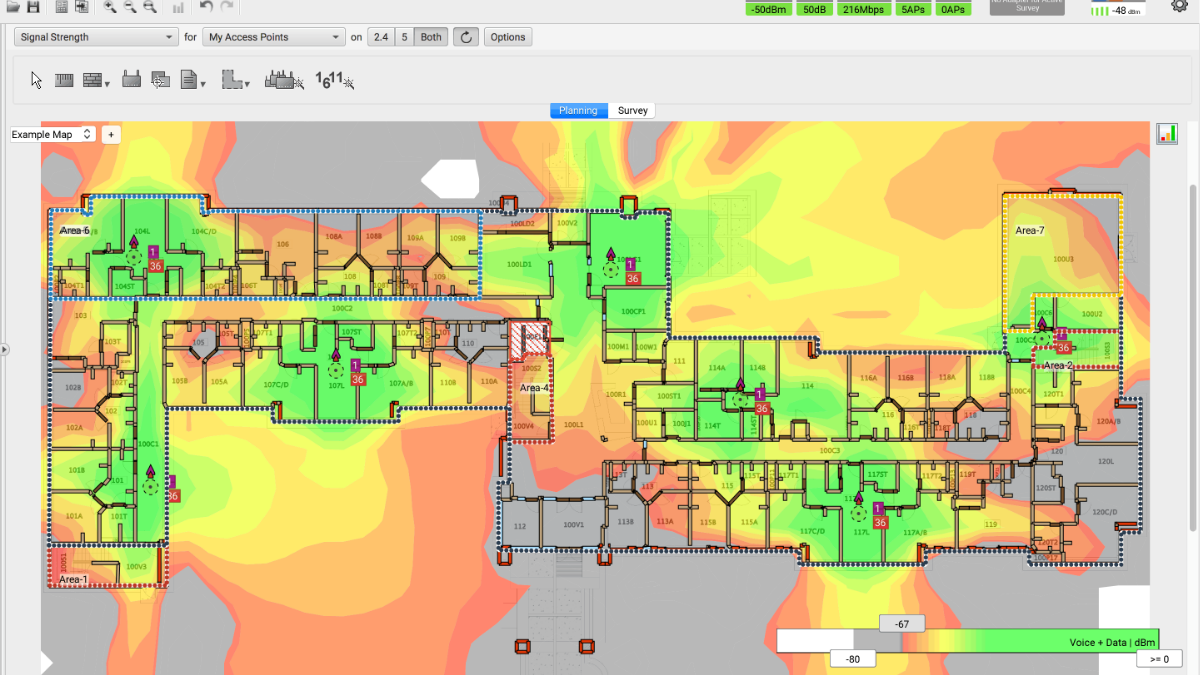
A predictive survey uses digital floor plans and RF modeling tools to simulate wireless coverage before equipment is installed.
Best suited for:
• New facility construction
• Pre-deployment planning
• Budget forecasting
Key benefit: Helps determine the optimal number and placement of access points before installation begins.
Active Survey
An active survey involves on-site testing with temporary access points and wireless measurement tools.
Best suited for:
• Existing facilities
• Network performance troubleshooting
• Infrastructure upgrades
Key benefit: Provides real-world performance data for accurate wireless optimization.
Passive Survey
A passive survey measures existing wireless signals and environmental interference without connecting to the network.
Best suited for:
• Identifying signal gaps
• Detecting interference sources
• Diagnosing performance problems
Key benefit: Helps uncover hidden issues affecting network reliability.
How Do Wi-Fi Site Surveys Improve Network Performance?
Many organizations deploy wireless networks without performing a site survey. This often leads to coverage and performance problems.
Common issues include:
• Dead zones with no signal
• Weak coverage areas
• Overlapping wireless channels
• Overloaded access points
• Inconsistent roaming between access points
A Wi-Fi site survey prevents these issues by enabling:
• Strategic access point placement
• Proper channel planning
• Balanced device distribution
• Reduced interference
• Optimized coverage
Why it matters: Proper planning ensures wireless networks meet operational requirements from the start.
Why Wi-Fi Site Surveys Are Critical for Retail and Commercial Environments
Wireless networks support many operational systems in retail and commercial facilities.
Common wireless-dependent systems include:
• Point-of-sale systems that rely on network infrastructure for transaction speed and reliability
• Inventory management devices
• Mobile checkout systems
• CCTV systems that rely on network infrastructure
• Guest Wi-Fi networks
Poor wireless performance can result in:
• Slow transaction processing
• Device disconnections
• Customer frustration
• Lost revenue opportunities
A professionally conducted site survey helps ensure uninterrupted connectivity across the facility.
How Environmental Factors Affect Wireless Performance
Wireless signals are affected by physical and electronic obstacles.
Common interference sources include:
• Concrete and metal walls
• Refrigeration equipment
• Elevators and industrial machinery
• Nearby wireless networks
• Bluetooth devices and IoT systems
Without identifying these factors, wireless networks may perform poorly regardless of hardware quality.
Key benefit: A site survey identifies environmental challenges that influence signal strength and reliability.
Device Density and Capacity Planning
Modern workplaces operate in high-density wireless environments where dozens or hundreds of devices connect simultaneously.
Typical connected devices include:
• Employee laptops and tablets
• Smartphones
• POS terminals
• IP surveillance cameras
• IoT devices
• Guest devices
A Wi-Fi site survey evaluates:
• Maximum concurrent device counts
• Bandwidth demand
• Access point capacity requirements
• Quality of service settings
Why it matters: Proper capacity planning prevents network congestion during peak usage.
Security and Compliance Planning
Wireless networks must be designed with security in mind.
A site survey helps support secure network design by enabling:
• Strategic access point placement
• Signal containment within building boundaries
• Segmentation of guest networks
• Secure authentication planning
Key benefit: A well-designed wireless network improves both security and performance.
Cost Efficiency and Long-Term Savings
Skipping a Wi-Fi site survey often leads to costly corrections later.
Common issues that result from poor planning include:
• Relocating access points after installation
• Purchasing additional hardware
• Increased labor costs
• Ongoing troubleshooting
Conducting a site survey ensures the correct number of access points are installed in the optimal locations from the start.
Why it matters: Upfront planning reduces long-term operational costs and deployment rework.
Post-Deployment Validation and Optimization
Wi-Fi site surveys are also used after installation to confirm network performance.
Post-deployment validation typically includes:
• Coverage heat mapping
• Signal strength testing
• Throughput measurements
• Roaming performance validation
This confirms the wireless infrastructure meets design expectations and operational requirements.
How Prime-Net Conducts Wi-Fi Site Surveys
Prime-Net uses professional tools and structured methodologies to evaluate wireless environments and design reliable networks.
Our Wi-Fi survey process includes:
• On-site facility assessment
• Building material and layout analysis
• Identification of interference sources
• RF coverage modeling and heat mapping
• Capacity planning for high-density environments
• Detailed reporting and design documentation
Prime-Net integrates Wi-Fi site surveys with installation services, electrical services, and project management for network deployments to ensure wireless networks align with overall infrastructure design.
This coordinated approach supports reliable, scalable wireless deployments across retail, commercial, and multi-site environments.
Typical Wi-Fi Survey Timeline
| Facility Type | Typical Survey Time |
| Small office or retail space | A few hours |
| Medium commercial facility | One full day |
| Large warehouse or enterprise facility | Multiple days |
Frequently Asked Questions
What is a Wi-Fi site survey?
A Wi-Fi site survey is a professional assessment of a facility used to determine optimal wireless network design, coverage, and access point placement.
When should a Wi-Fi site survey be performed?
A survey should be conducted before deploying a new wireless network, during infrastructure upgrades, or when troubleshooting wireless performance issues.
How long does a Wi-Fi survey take?
The timeline depends on the size and complexity of the facility. Smaller environments may take several hours, while large facilities may require multiple days.
Is a Wi-Fi site survey necessary for small businesses?
Yes. Even smaller facilities can experience interference, coverage gaps, and performance issues without proper wireless planning.
Can a Wi-Fi site survey improve existing Wi-Fi performance?
Yes. Surveys identify coverage gaps, interference sources, and capacity limitations, allowing targeted improvements to existing networks.
Final Thoughts
A Wi-Fi site survey is one of the most important steps in delivering reliable wireless connectivity. It eliminates guesswork, reduces deployment risk, and ensures wireless infrastructure is designed to support real-world operational demands.
Organizations that invest in professional wireless planning experience stronger network performance, fewer connectivity issues, and improved user experiences.
Prime-Net provides comprehensive Wi-Fi site surveys and wireless deployment services for retail, commercial, and multi-site organizations. Our team designs and validates wireless networks that deliver consistent performance, strong security, and long-term scalability.
For more information about scheduling a Wi-Fi site survey, contact Prime-Net at info@prime-net.net. Our team is ready to support your organization with professionally engineered wireless infrastructure.