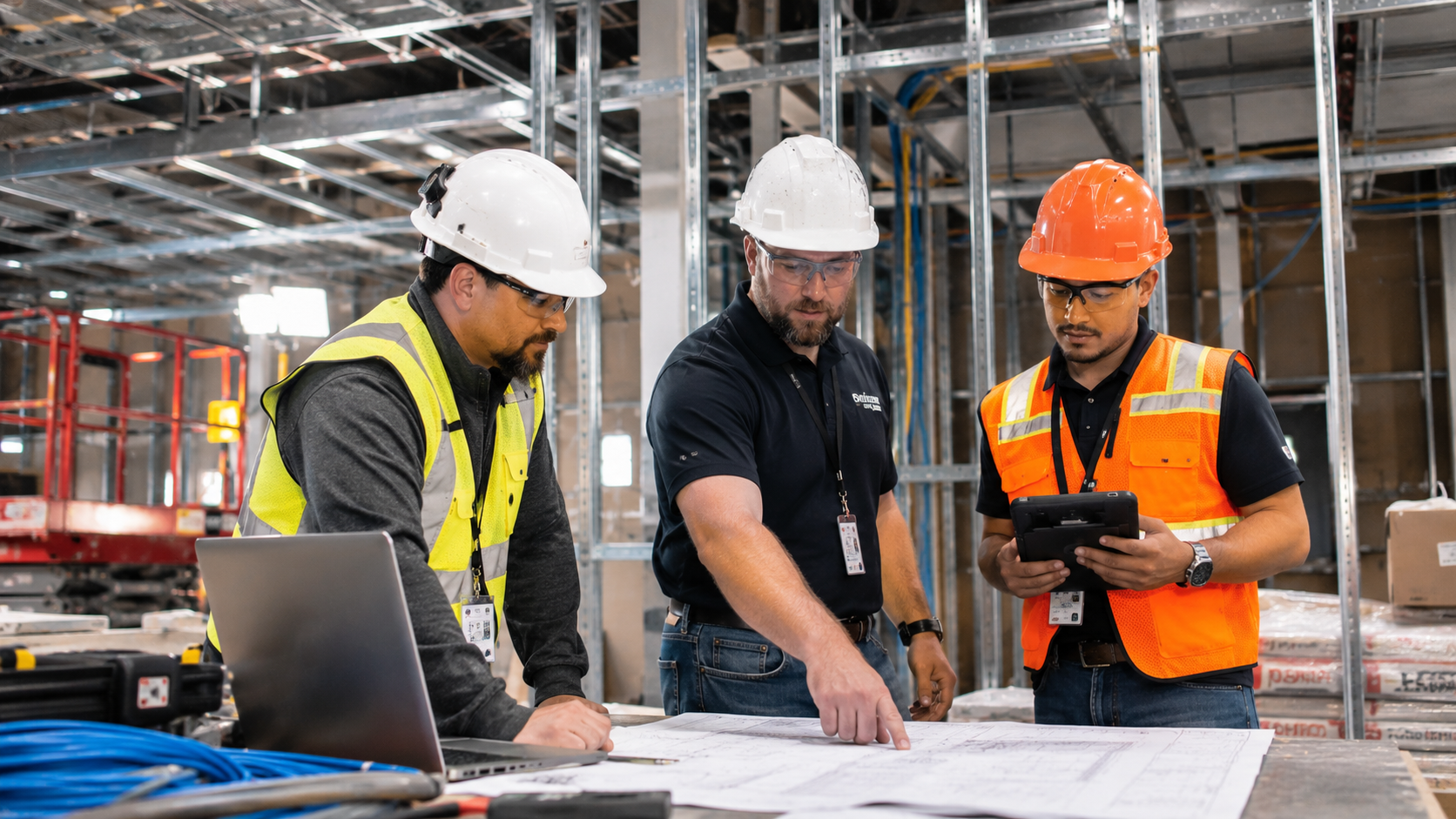
Commercial technology deployment projects rarely involve just installing equipment and moving on to the next location. They require coordination between project managers, field technicians, site contacts, vendors, and other contractors. Each participant has responsibilities that must align for the project to move forward efficiently.
When these activities are not properly coordinated, even relatively straightforward installations can experience delays and unexpected expenses. A site may not be ready when technicians arrive. Equipment may be missing or incorrectly staged. Installation requirements may be misunderstood. A scheduling conflict may force a crew to return to a location that should have been completed during the initial visit.
These situations create costs that extend beyond the original installation scope. They can lead to additional labor, travel expenses, schedule adjustments, repeat site visits, and disruptions to other planned work.
Effective project management helps prevent these problems by establishing clear responsibilities, coordinating resources, tracking progress, and addressing potential issues before they affect execution.
For commercial environments with multiple locations, the importance of project management becomes even greater. A small coordination problem at one location can become a recurring issue when the same process is repeated across dozens or hundreds of sites.
Understanding how project management reduces delays and cost overruns can help businesses plan technology deployments more effectively and maintain better control over project execution.
1. Establishing Clear Project Scope Before Work Begins
One of the most common sources of project delays and unexpected expenses is an unclear scope of work.
When project requirements are not properly defined, different stakeholders may have different expectations about what the installation includes. This can result in incomplete work, additional requests, scheduling changes, and disagreements about project responsibilities.
A clearly defined scope establishes what needs to be completed, where the work will take place, and what resources are required.
For commercial technology deployments, this may include:
-
Equipment and devices to be installed
-
Required network infrastructure and cabling
-
Installation locations and quantities
-
Site-specific requirements
-
Labor and technician requirements
-
Scheduling expectations
-
Testing and quality assurance procedures
-
Project documentation and closeout requirements
Defining these details early helps project managers identify potential issues before technicians are dispatched.
For example, a multi-location point-of-sale installation may involve different equipment configurations, existing infrastructure conditions, and site access requirements. Without a consistent scope, technicians may arrive at locations with incomplete instructions or discover that additional work is necessary.
A structured planning process helps establish expectations and reduces the likelihood of unplanned work.
For additional context, see Why Project Management Matters in Network Deployments.
2. Improving Scheduling and Resource Coordination
Scheduling is one of the most important responsibilities in project management.
Technology deployment projects often require coordination between multiple resources, including technicians, equipment, site personnel, and other contractors. If these resources are not available at the right time, installation schedules can quickly become disrupted.
For example, dispatching technicians before a location is ready can result in wasted travel time and unproductive labor hours. Scheduling an installation before equipment arrives can create unnecessary delays. Overlapping work with another contractor can also prevent technicians from accessing the areas where installation is required.
Project management helps reduce these risks by coordinating the timing and availability of essential resources.
Coordinating technician availability
Project managers must consider the number of technicians required, their availability, the location of each project, and the skills needed to complete the assigned work.
For multi-site deployments, scheduling also requires consideration of geographic coverage and the sequence of installations.
Proper coordination helps avoid unnecessary scheduling conflicts and reduces the likelihood of sending technicians to locations where they cannot perform the required work.
Aligning equipment and materials
Technicians need the correct equipment, materials, and installation information before arriving on site.
Project managers can coordinate equipment staging, shipping schedules, and site requirements to help ensure that the necessary resources are available when work is scheduled.
This is particularly important for projects involving POS equipment, wireless access points, network switches, CCTV systems, and structured cabling.
Managing site access
Commercial locations may have specific access restrictions, operating hours, security procedures, and installation windows.
These requirements should be confirmed before dispatch whenever possible.
Coordinating access in advance helps reduce the risk of missed appointments, interrupted work, and unnecessary return visits.
3. Identifying Potential Problems Before They Become Expensive
Project delays are often the result of issues that were not identified early enough.
A missing piece of equipment, an incomplete site assessment, an infrastructure limitation, or an unexpected scheduling conflict can affect the entire installation process.
The earlier these problems are identified, the more opportunities project managers have to address them without disrupting the schedule.
This is where proactive project planning becomes especially valuable.
Conducting site assessments
Site assessments help identify conditions that may affect installation requirements.
Depending on the project, this may include evaluating existing network infrastructure, wireless coverage, equipment locations, cable pathways, and available power.
For example, a wireless network installation may require a site survey to identify coverage limitations, potential interference, and appropriate access point placement.
Skipping this step can lead to installation adjustments, additional labor, and performance issues after deployment.
Prime-Net discusses this in greater detail in The Importance of Wi-Fi Site Surveys.
Reviewing installation readiness
Before work begins, project managers should confirm that each location is prepared for the scheduled installation.
Readiness considerations may include:
-
Equipment availability
-
Confirmed site access
-
Completed prerequisite construction or electrical work
-
Available network connections
-
Approved installation locations
-
Required site contact information
-
Clear installation instructions
Not every project will require the same preparation process. However, establishing a consistent readiness review helps identify preventable issues before they affect field execution.
Recognizing dependencies
Some installation activities cannot begin until other work is complete.
For example, network equipment installation may depend on electrical work, completed cable pathways, or the availability of network connections.
Understanding these dependencies helps project managers establish realistic schedules and avoid assigning technicians to work that cannot yet be completed.
4. Reducing Rework Through Better Communication
Poor communication can create significant problems during commercial technology deployments.
When project requirements are not communicated clearly, technicians may receive incomplete instructions, site contacts may misunderstand installation expectations, and project stakeholders may not know when important milestones have changed.
These communication gaps can result in incorrect installations, incomplete work, repeat visits, and additional labor costs.
Effective project management creates a structured communication process that keeps everyone aligned.
Providing consistent installation instructions
Field technicians should receive the information they need before arriving at a location.
Depending on the project, this may include:
-
Scope of work
-
Installation diagrams or layouts
-
Equipment requirements
-
Site-specific instructions
-
Access information
-
Contact details
-
Testing and closeout expectations
Consistent instructions reduce confusion and help technicians complete work according to established project requirements.
Establishing communication responsibilities
Project stakeholders should understand who is responsible for providing updates, approving changes, resolving issues, and communicating with field personnel.
Without clearly assigned responsibilities, important questions can remain unresolved while technicians wait for direction.
A defined communication structure helps issues reach the appropriate person more quickly.
Maintaining visibility into project status
Project managers need reliable information about completed work, outstanding tasks, installation issues, and upcoming activities.
Regular status updates help identify locations that are falling behind schedule and allow teams to adjust resources or priorities when necessary.
For projects involving multiple locations, this visibility is essential to maintaining consistency across the entire rollout.
5. Controlling Costs Through Better Planning
Cost overruns do not always result from major project failures. They can develop through smaller inefficiencies that accumulate over time.
Additional technician hours, unnecessary travel, repeat visits, equipment shortages, and scheduling changes can gradually increase project expenses.
Project management helps control these costs by improving resource planning and identifying avoidable expenses.
Managing labor costs
Labor is a significant component of many technology installation projects.
Poor scheduling can result in technicians spending time waiting for site access, missing required equipment, or traveling to locations that are not ready.
Project managers can help control these expenses by confirming installation readiness, coordinating schedules, and assigning the appropriate resources to each task.
Reducing unnecessary travel
For projects involving multiple locations, travel planning can have a meaningful effect on overall costs.
When installations are not properly coordinated, technicians may need to revisit locations or travel inefficiently between sites.
Planning installation sequences and confirming site readiness before dispatch can help reduce avoidable travel and improve technician utilization.
Preventing repeat visits
A return visit may be necessary when additional work is discovered, equipment is unavailable, or an installation cannot be completed as planned.
Although some return visits are unavoidable, many can be reduced through better preparation.
Confirming the scope, equipment, site access, and installation requirements before dispatch helps improve the likelihood of completing work during the scheduled visit.
Managing scope changes
Changes to project requirements can affect labor, equipment, scheduling, and overall costs.
Project managers should establish a process for documenting requested changes, evaluating their impact, and obtaining the appropriate approval before additional work proceeds.
This helps prevent unplanned work from becoming an uncontrolled source of project expenses.
6. Maintaining Consistency Across Multi-Site Deployments
Managing one installation is different from managing a rollout across multiple commercial locations.
Multi-site projects involve more scheduling considerations, different site conditions, varying access requirements, and a larger number of people responsible for execution.
Without centralized coordination, each location may be managed differently.
This can lead to inconsistent installation quality, uneven progress, communication gaps, and difficulty tracking project completion.
A standardized project management approach helps create consistency across the deployment.
Centralized project coordination
A centralized management structure provides a primary point of coordination for schedules, field resources, project updates, and issue resolution.
Instead of relying on disconnected communication between individual locations and technicians, stakeholders can work through a more consistent process.
This makes it easier to monitor progress and identify problems that may affect multiple locations.
Standardized execution procedures
Establishing consistent procedures helps ensure that technicians understand what is expected at every location.
Standardization may include installation instructions, quality assurance requirements, documentation procedures, and closeout expectations.
This is particularly important when several technicians or installation teams are working on the same deployment.
Tracking progress by location
Project managers should have a clear understanding of which locations are scheduled, in progress, completed, or awaiting resolution.
Location-level tracking helps identify delays and provides a better view of overall project performance.
For a closer look at the challenges involved, read Managing Multi-Site Network Installations.
7. Using Quality Assurance to Prevent Costly Corrections
Completing an installation does not necessarily mean the work is finished.
Installed equipment and infrastructure should be reviewed to confirm that the work meets project requirements and that outstanding issues have been addressed.
Without a consistent quality assurance process, installation problems may go unnoticed until a system is placed into operation.
Correcting these problems later can require additional technician visits, troubleshooting, and coordination.
Quality assurance helps reduce this risk by creating an opportunity to identify issues before project closeout.
Verifying completed installation work
Quality checks should reflect the requirements of the specific project.
Depending on the installation, this may include confirming equipment placement, reviewing cable connections, checking device connectivity, and verifying that the required installation tasks have been completed.
Documenting outstanding issues
Any incomplete work or identified deficiencies should be documented and assigned for resolution.
Clear documentation helps prevent issues from being overlooked and provides project managers with visibility into what remains before closeout.
Maintaining closeout records
Project closeout documentation provides a record of completed work and outstanding items.
Depending on project requirements, records may include installation confirmations, site photographs, test results, equipment information, and issue reports.
Consistent closeout procedures make it easier to verify project completion and provide stakeholders with a clearer understanding of deployment status.
Prime-Net also explores the relationship between installation practices and long-term performance in How Proper Installation Prevents Network Downtime.
8. Managing Project Risks and Schedule Changes
Even well-planned projects can encounter unexpected challenges.
Equipment availability may change. A location may become inaccessible. Existing infrastructure may not support the planned installation. Other contractors may experience delays that affect the project schedule.
Effective project management does not eliminate every risk. It helps teams recognize, evaluate, and respond to problems before they create larger disruptions.
Identifying risks early
Project managers should consider potential obstacles during the planning process.
Common risks in commercial technology deployments include:
-
Incomplete site preparation
-
Equipment delivery delays
-
Limited installation windows
-
Unavailable site contacts
-
Existing infrastructure limitations
-
Coordination conflicts with other contractors
-
Changes in installation requirements
Identifying these risks helps project teams prepare appropriate responses.
Establishing contingency plans
When a project encounters an unexpected issue, having a defined response process can reduce the time required to resolve it.
For example, if a location is not ready for installation, the project team may need to evaluate whether another location can be completed first or whether the schedule should be adjusted.
The appropriate response depends on project priorities, available resources, and contractual requirements.
Communicating schedule changes
When changes are unavoidable, stakeholders should receive timely updates.
Clear communication helps prevent confusion about technician availability, installation dates, and project milestones.
It also gives stakeholders an opportunity to coordinate related activities and minimize the impact of the disruption.
9. Measuring Project Performance to Improve Future Deployments
Project management should not end when the last installation is completed.
Reviewing project performance can help organizations identify recurring problems, evaluate planning assumptions, and improve future deployments.
Without performance tracking, the same scheduling and coordination issues may continue across multiple projects.
Useful project performance indicators may include:
| Performance Indicator | What It Helps Evaluate |
| On-time completion rate | Whether installations are being completed according to schedule |
| First-visit completion rate | How often work is completed without requiring an additional visit |
| Schedule variance | The difference between planned and actual completion dates |
| Labor utilization | How effectively technician time is being used |
| Rework frequency | How often completed or partially completed work requires correction |
| Open issue count | The number of unresolved installation or project issues |
| Cost variance | The difference between planned and actual project expenses |
| Closeout completion | Whether required documentation and outstanding tasks are finalized |
These indicators provide a more objective view of project performance.
For example, a high number of repeat visits may indicate problems with site readiness, installation instructions, or equipment coordination.
Frequent schedule changes may point to unrealistic planning assumptions or insufficient communication between project stakeholders.
By reviewing these patterns, project managers can make adjustments that improve execution on future projects.
10. Why Project Management Matters for Commercial Technology Deployments
Commercial technology projects often involve systems that must work together within an existing business environment.
Point-of-sale systems, wireless networks, structured cabling, and CCTV installations all have specific installation requirements. These requirements must be coordinated with site conditions, available infrastructure, equipment, and project schedules.
A poorly managed installation can create problems beyond the immediate project.
For example, incomplete network infrastructure may affect POS connectivity. Poorly coordinated wireless access point installations may result in coverage issues. Inadequate documentation may make future troubleshooting more difficult.
Project management helps connect planning, installation, quality assurance, and project closeout into one coordinated process.
At Prime-Net, this is especially relevant to nationwide technology deployments across retail and commercial environments.
Our approach emphasizes centralized project management, coordinated field resources, standardized execution, quality assurance, and consistent closeout procedures.
Through services such as Point-of-Sale Installation, Wireless Networks, Network Infrastructure, CCTV Installation, and Project Staffing, Prime-Net supports technology deployment projects that require organized execution across multiple locations.
Frequently Asked Questions
How does project management prevent project delays?
Project management helps prevent delays by coordinating schedules, confirming site readiness, aligning equipment availability, communicating requirements, and identifying potential issues before they affect installation activities.
It also provides a structured process for resolving problems and adjusting schedules when necessary.
What causes cost overruns in technology deployment projects?
Common causes include unplanned labor, repeat site visits, equipment shortages, scheduling conflicts, unclear project scope, incomplete site preparation, and changes in installation requirements.
Many of these issues can be reduced through better planning, coordination, and cost tracking.
Why is project management important for multi-site installations?
Multi-site installations involve multiple locations, technicians, schedules, and site-specific requirements.
Project management provides centralized coordination and standardized procedures that help maintain visibility, consistency, and control throughout the rollout.
How can project managers reduce unnecessary technician visits?
Project managers can reduce unnecessary visits by confirming site readiness, verifying equipment availability, communicating installation instructions, coordinating site access, and ensuring technicians have the information needed before dispatch.
What is the role of quality assurance in project cost control?
Quality assurance helps identify installation problems before project closeout. Addressing issues earlier can reduce the likelihood of additional troubleshooting, corrective work, and repeat site visits.
Can project management eliminate all project delays and cost overruns?
No. Unexpected conditions, equipment availability, site restrictions, and changes in project requirements can still affect schedules and expenses.
However, effective project management helps reduce preventable problems, improve visibility, and provide a more organized response when changes occur.
Final Thoughts
Project delays and cost overruns are not always caused by installation complexity. In many cases, they result from gaps in planning, scheduling, communication, resource coordination, and quality control.
Effective project management addresses these challenges by establishing clear expectations, preparing locations before dispatch, coordinating technicians and equipment, tracking progress, and resolving issues before they become larger problems.
For commercial technology deployments, these practices are particularly important when work must be completed across multiple locations with consistent installation requirements.
A well-managed project gives businesses better visibility into execution, helps control avoidable expenses, and creates a more reliable process from initial planning through final closeout.
Planning a multi-location technology deployment?
Prime-Net provides nationwide technology deployment and installation support for retail and commercial environments. Our team coordinates project management, field resources, installation execution, and quality assurance to support organized and consistent deployments.
Visit Prime-Net to learn more about our services or contact info@prime-net.net to discuss your next project.